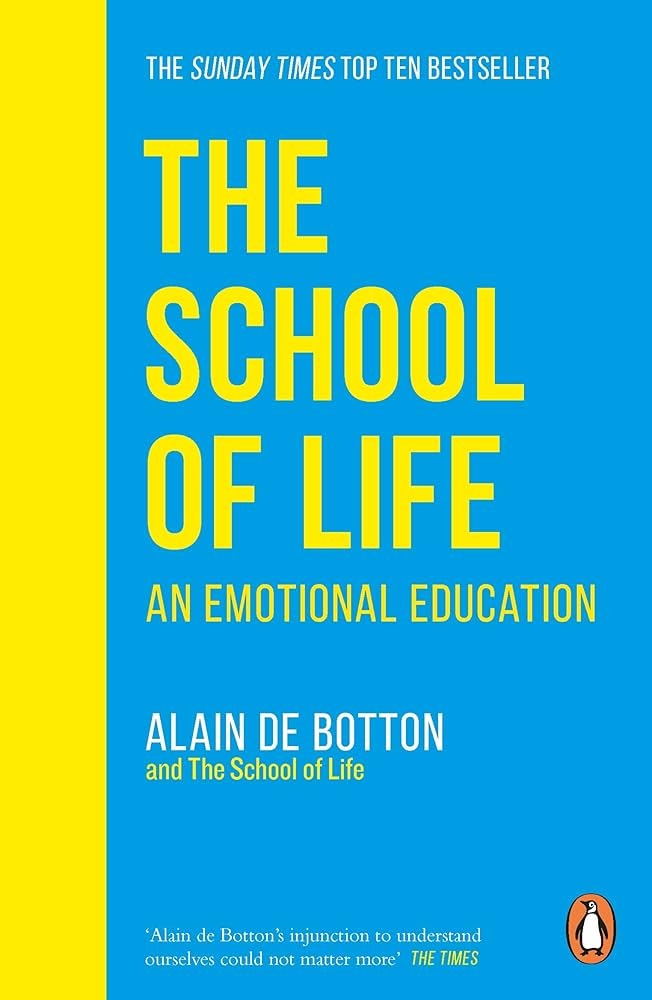
The School of Life: An Emotional Education
A guide to emotional intelligence, covering self-knowledge, relationships, work, and anxiety.
Alain de Botton's The School of Life: An Emotional Education is a profound guide to understanding ourselves and our relationships. It argues that emotional intelligence is not an innate trait but a skill that can be learned and practiced.
Key Takeaways
1. Self-Knowledge
We are often strangers to ourselves. The book encourages us to explore our childhoods and past experiences to understand why we react the way we do. "We are all broken," de Botton suggests, and recognizing our own madness is the first step towards sanity.
2. Relationships
The romantic ideal of "The One" who will understand us intuitively is dangerous. Real love is a skill, not just an enthusiasm. It involves the difficult work of interpreting each other's distorted signals and treating our partners with the charity we would extend to a frightened child.
3. Work
Ideally, work should be a place where we can deploy our talents to serve humanity. However, the modern world often disconnects us from the end product of our labor. Finding meaning requires understanding what psychological needs our work fulfills, not just the financial rewards.
4. Anxiety
Anxiety is a permanent feature of life, not a bug. It signals that we care about things. Instead of trying to eliminate it, we should learn to manage it by accepting our vulnerability and the inevitable imperfections of life.
Conclusion
This book offers a gentle, therapeutic perspective on the human condition. It doesn't promise endless happiness but rather a kind of "good enough" sanity—a way to navigate life's storms with a little more grace and self-compassion.