The Ritual of Pour-Over Coffee
Exploring the purity, variables, and process behind making the perfect pour-over coffee.
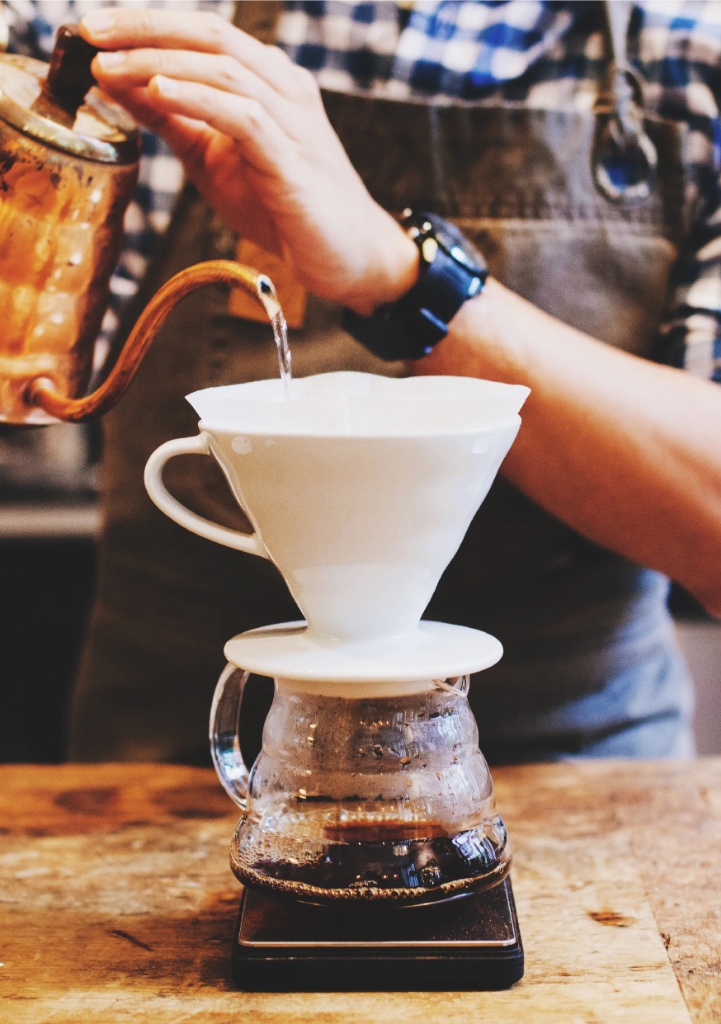
The pour-over method is often celebrated as the purest way to experience black coffee. By pouring hot water over fresh coffee grounds in a filter, you have complete control over every variable: water temperature, extraction time, and the flow of water.
The Essentials
To get started, you'll need a few pieces of equipment:
- A Dripper: Devices like the V60, Chemex, or Kalita Wave.
- Filters: Paper filters specific to your dripper.
- A Gooseneck Kettle: Essential for precise pouring control.
- A Burr Grinder: Consistent grind size is critical for even extraction.
- A Scale: For exact coffee-to-water ratios.
The Process
1. The Bloom
After rinsing the filter and adding the ground coffee, the first step is the bloom. Pour just enough water (usually twice the weight of the coffee) to saturate all the grounds. You'll see the coffee bubbling and expanding. This is carbon dioxide rapidly escaping from the fresh beans. Let it bloom for 30-45 seconds. Skipping this step leads to uneven extraction as the trapped gas repels water.
2. The Pour
After the bloom, begin pouring water in slow, concentric circles starting from the center and moving outwards, then back inwards. Be careful not to pour directly down the sides of the filter, which allows water to bypass the coffee entirely (known as channeling).
3. The Drawdown
Once you've poured all your water, the water level should slowly draw down through the coffee bed. When finished, the bed of grounds should be flat, indicating an even extraction.
Why It Matters
Unlike immersion methods (like a French Press) or pressurized methods (like espresso), percolation in a pour-over highlights the delicate, nuanced flavor notes of the coffee bean. It tends to produce a cleaner, brighter cup where acidity and fruity or floral notes can truly shine.